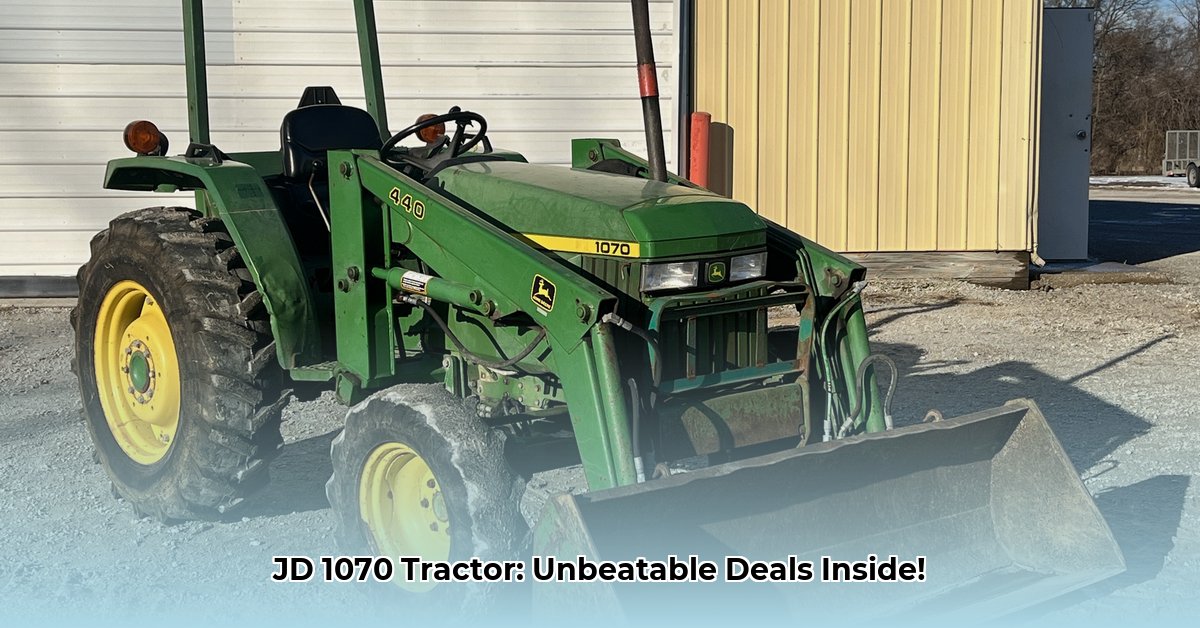
JD 1070 Tractor: Your Field Guide to the Perfect Find
Hunting for a used John Deere 1070 tractor? This guide helps you navigate the market and find the best deal. These reliable workhorses, manufactured by Yanmar and sold by John Deere from 1989 to 1998, offer a blend of power and affordability. However, used prices vary significantly. For more information on John Deere tracked tractors, check out this resource. Let's equip you with the knowledge to make a smart purchase.
Understanding the JD 1070 Marketplace
Used JD 1070 prices range widely, from $6,500 to $19,900. Why the huge difference? It all comes down to condition and hours of operation. A low-hour tractor (under 2,000 hours) commands a higher price than a high-hour tractor (4,000+ hours), which might need repairs. Inconsistencies in reported horsepower and drive type (2WD vs. 4WD) further complicate the search. Careful research is crucial. Isn't it surprising how much variation there is in the market for these classic tractors? This highlights the importance of thorough due diligence.
What Impacts the Price of a JD 1070?
Several factors determine a used JD 1070's price:
- Hours of Operation: Lower hours mean less wear and tear, and thus, a higher value. It's like mileage on a car – lower is better. What's your ideal operating hour threshold when searching for a used tractor?
- Condition: A well-maintained tractor with minimal rust and damage will always fetch more. A complete service history is a huge plus. Is a pristine condition worth the extra cost, or is a functional tractor sufficient for your needs?
- Drive Type: Four-wheel-drive (4WD) models generally cost more than two-wheel-drive (2WD) models due to enhanced traction and capabilities. Which drive type best suits your farming requirements?
- Accessories: Extra attachments (loaders, backhoes, mower decks) increase both the tractor's utility and value.
Your JD 1070 Buying Strategy: A Step-by-Step Guide
- Set a Realistic Budget: Determine your spending limit before you start.
- Thorough Research: Compare listings carefully, noting hours, condition, accessories and maintenance issues. Remember, online listings often lack vital details!
- Prioritize Condition: Don't let a low price tempt you into buying a tractor needing major repairs. A well-maintained tractor saves money in the long run. A seemingly small detail now could result in a large repair bill later.
- Negotiate Firmly: The asking price is a starting point. Research comparable tractors to help negotiate a fair price.
- Pre-Purchase Inspection: Before buying, inspect the tractor thoroughly. Check for leaks, rust, dents, and test all functions. Consider a qualified mechanic's inspection.
The Long View: JD 1070 Investment Potential
Well-maintained JD 1070s hold their value relatively well, especially low-hour examples. There's even a collector's market, which can increase prices over time. Patience is key to finding the right tractor at the right price. Is this a short-term practical tool or a potential collector's item?
JD 1070 Tractor Price Ranges
These are estimates; actual prices vary by condition, location, and features.
| Condition | Hours of Operation | Approximate Price Range (USD) | Notes |
|---|---|---|---|
| Excellent | Under 1,000 | $15,000 - $19,900 | Pristine condition, low hours, highly sought after |
| Good | 1,000 - 2,000 | $10,000 - $15,000 | Minor wear, well-maintained, good value |
| Fair | 2,000 - 4,000 | $7,000 - $10,000 | More wear, may need minor repairs |
| Needs Work | Over 4,000 | $6,500 - $7,000 | Significant wear, likely requires repairs |
Buying a used tractor involves risk, but thorough research and negotiation improve your chances of securing a fair deal.
How to Determine Fair Market Value for a Used John Deere 1070 Tractor
Accurately assessing a used JD 1070's value is crucial.
Key Takeaways:
- Age and hours heavily influence value.
- Condition is paramount.
- Location affects prices due to regional market variations.
- Additional features and attachments increase value.
- Online tools offer estimates, but professional appraisals provide greater accuracy.
- Depreciation is a major factor, but its rate isn't consistent.
Understanding Depreciation
Tractors depreciate, but the rate varies depending on age, hours, condition, and features. Online calculators provide estimates, but they lack the nuance of a professional appraisal.
Condition Assessment
A thorough visual inspection is critical. Note any wear and tear, paint chips, engine health, leaks, or needed repairs. Condition significantly impacts value.
Regional Market Fluctuations
Prices differ geographically due to varying supply and demand. Research prices in your region for a more accurate assessment.
Features and Attachments
Extra features and attachments add considerable value. Consider these aspects when comparing tractors.
Online Tools vs. Professional Appraisals
Online tools provide initial estimates, but for a precise valuation, a professional appraisal is recommended, particularly for high-value tractors.
Step-by-Step Guide to Determining Fair Market Value
- Gather Information: Note age, hours, and model number.
- Assess Condition: Conduct a thorough inspection, detailing any damage.
- Identify Features: List additional features or attachments.
- Research Regional Prices: Find comparable tractors for sale in your area.
- Use Online Tools: Utilize online valuation tools as a starting point.
- Consider Professional Appraisal: Consult an expert for greater accuracy.
- Analyze Data: Compare findings, accounting for all factors.
- Negotiate Price: Use your comprehensive evaluation to negotiate.
[1] Tractor Value Estimator. https://tractor-value-estimator.engimarket.com/